
The way digital visibility is earned in London has undergone a decisive shift. As AI agents take on more of the work once done by human searchers, the centre of gravity has shifted from ranking for clicks to being selected as an answer. By 2026, this change will no longer be theoretical. It is already reshaping how brands are discovered, compared, and chosen across search, commerce, professional services, and local markets.
For SEO specialists, digital marketers, and product leaders, the implication is stark. Optimising only for human browsing behaviour is now incomplete. Increasingly, decisions are made upstream by autonomous systems that read, verify, and act without ever opening a traditional search results page. This article examines how London has become a proving ground for this shift, why Answer Engine Optimisation is replacing legacy SEO models, and what organisations must do to remain visible when the click is no longer the primary unit of value.
Why search behaviour changed faster than most teams expected
The move from search first to agent first did not happen overnight. It accelerated as AI systems crossed a threshold of trust, reliability, and autonomy. In London, where professional services, retail, and finance intersect at high velocity, the conditions were ideal for rapid adoption.
Busy users with complex needs were early adopters. Executives, founders, and procurement teams increasingly delegated research and scheduling tasks to AI systems embedded in browsers, operating systems, and productivity tools. What began as an assisted search evolved into delegated decision-making.
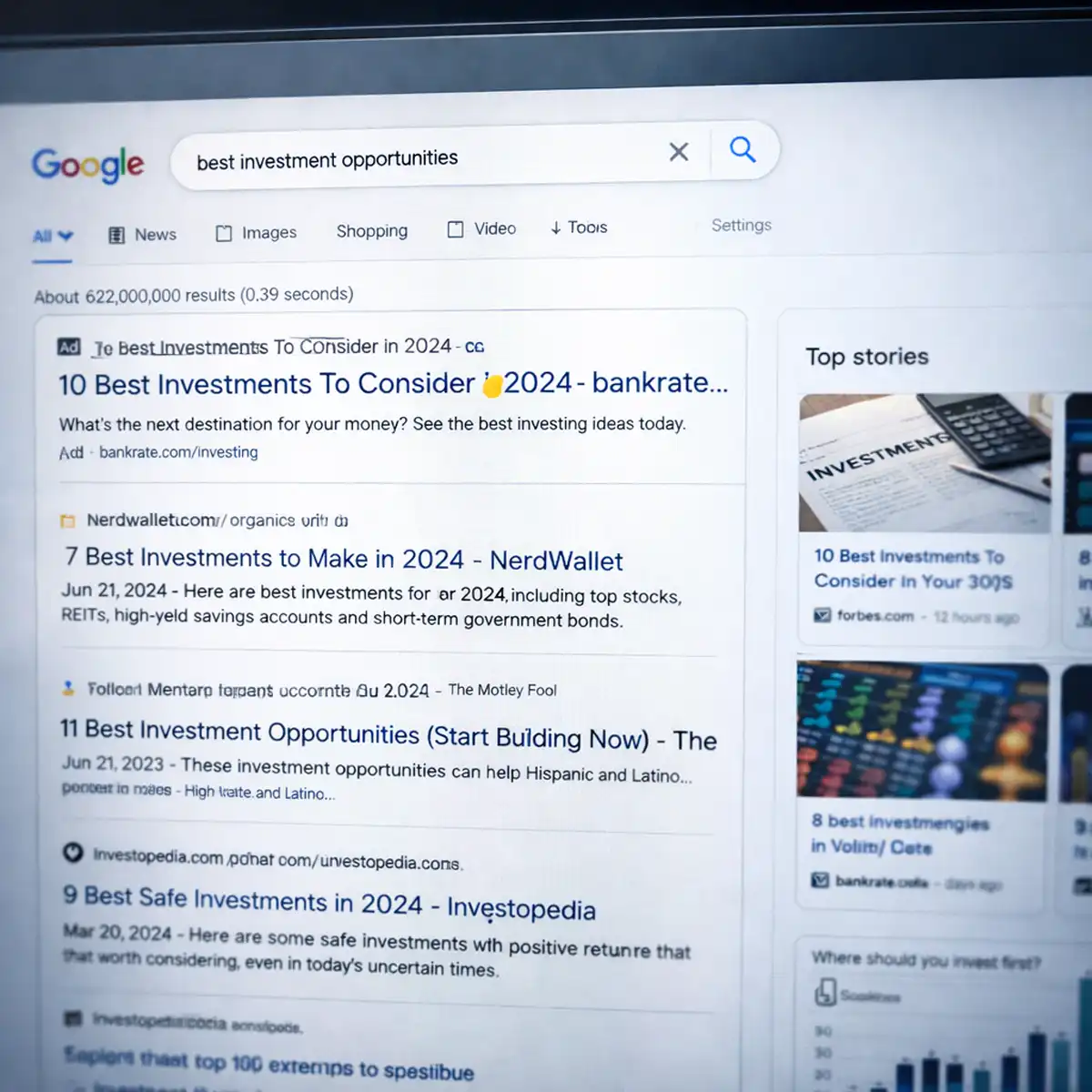
At the same time, search platforms themselves changed. Search results pages became layered with summaries, actions, and agent-driven interfaces. Traditional organic listings were still present, but they were no longer the default path. In many cases, they became fallback options rather than the starting point.
This is the context in which Answer Engine Optimisation emerged as a distinct discipline. It reflects a shift from competing for attention to qualifying as a trusted source that machines are willing to act on.
What AI agents actually do in 2026
To understand why SEO strategy must adapt, it helps to be precise about what modern AI agents are and are not. These systems are not conversational overlays that simply summarise web pages. They are high-agency software entities designed to complete tasks across multiple steps.
An AI agent in 2026 can interpret intent, plan actions, gather information from multiple sources, evaluate credibility, and execute outcomes. In practical terms, that means booking appointments, comparing suppliers, placing orders, or preparing recommendations without presenting a list of links to a human user.
In London, this behaviour is especially visible in sectors with high decision density. Professional services, property, luxury retail, healthcare, and financial products are all areas where agents now operate with minimal supervision. The agent’s goal is not to browse. It is to be decided.
This distinction matters because it breaks the traditional SEO funnel. There is no impression, click, session, or conversion sequence when the agent makes a choice on the user’s behalf. Visibility becomes binary. Either your brand is selected, or it is ignored.
Why Answer Engine Optimisation is not just rebranded SEO
It is tempting to treat AEO as a marketing label layered on top of existing SEO practices. That approach underestimates the structural change underway. While there is overlap in fundamentals, the optimisation target is fundamentally different.
Traditional SEO optimises for ranking positions within a list. AEO optimises for selection as a single authoritative source. This difference cascades into how content is written, structured, validated, and maintained.
In an agent-driven environment, ambiguity is a liability. Content that relies on persuasive language, implied claims, or comparative framing without evidence is less likely to be used. Agents prefer clarity, consistency, and verifiability over rhetorical strength.
This is why many high-ranking pages from earlier search eras are losing influence. They were designed to attract clicks, not to withstand automated scrutiny.
How agents decide what to trust
AI agents are conservative by design. Their primary risk is acting on incorrect information. As a result, trust signals matter more than ever. In 2026, trust is inferred through patterns rather than individual claims.
Agents evaluate consistency across sources, alignment with structured data, historical reliability, and external corroboration. This is where E E A T principles move from abstract guidelines to operational requirements.
Experience is inferred from demonstrable depth and specificity. Expertise is inferred from technical accuracy and domain-appropriate language. Authority is inferred from recognition across the web ecosystem. Trustworthiness is inferred from transparency, provenance, and error avoidance.
For London-based organisations, this means that reputation signals must be machine-readable as well as human visible. Testimonials, credentials, and claims that live only in marketing copy are insufficient if they are not supported elsewhere.
The role of structured data as an agent interface
In 2026, structured data has moved from enhancement to infrastructure. Schema markup is no longer primarily about rich results. It is about providing agents with a reliable interface to understand what a business offers and how it operates.
High-fidelity structured data allows agents to answer questions that were previously ambiguous. Availability, service areas, pricing models, certifications, and operational constraints all become explicit. This reduces friction and increases confidence.
For London organisations, especially those operating in regulated or high-value sectors, this clarity is essential. An agent comparing suppliers in EC1 or W1 cannot infer local relevance from copy alone. It relies on explicit signals.
This is also where many teams fall behind. A partial or outdated schema creates uncertainty. From an agent’s perspective, uncertainty is grounds for exclusion.
Fun fact: In early enterprise testing, AI agents were found to ignore well-known brands entirely when structured data conflicted with on-page claims, even when human users still trusted the brand._

Semantic density over keyword coverage
One of the most persistent misconceptions about AEO is that keywords no longer matter. In reality, they matter differently. Agents do not look for repeated phrases. They look for semantic completeness.
Semantic density refers to how thoroughly a piece of content addresses a concept, its attributes, and its relationships. A page optimised for AEO does not simply mention a service. It defines what it is, who it is for, where it applies, and under what conditions it operates.
For example, a London service provider optimised for hyperlocal SEO in the past might have repeated postcode references. In an AEO context, it must explicitly connect location, service scope, availability, and credentials in a way that can be parsed and verified.
This approach aligns closely with how agents process multi-step queries. When an agent is tasked with finding, evaluating, and acting, it favours sources that reduce its planning burden.
Why does London amplify the agent shift?
London’s digital economy accelerates trends that later become global. Several factors explain why the agent-first paradigm has taken hold faster here than in many other markets.
The city concentrates high intent users with limited time. It also concentrates services where decisions carry financial, legal, or reputational consequences. In these contexts, delegating research to an AI agent is rational, not experimental.
London also benefits from dense data environments. Public records, professional registries, certifications, and reviews are widely available. This makes it easier for agents to cross-validate information and harder for weak signals to persist.
As a result, London brands face both an opportunity and a risk. Those who adapt early can become default selections. Those that delay may remain visible to humans but invisible to machines.
Sector-specific implications
The impact of AEO is not uniform. Different sectors experience different pressures based on how decisions are made and delegated.
In financial services, agents increasingly compare products based on compliance, risk, and eligibility before presenting options to users. This changes how content around rates, terms, and ESG criteria must be structured.
In professional services, agents prioritise credentials, scope, and availability. Marketing language matters less than demonstrable fit. Firms that rely on reputation without codifying it risk being overlooked.
In high-end retail and local services, agents blend local relevance with trust. Reviews alone are insufficient. Provenance, certifications, and operational transparency become decisive.
Measuring success when clicks disappear
One of the hardest adjustments for digital teams is measurement. Traditional analytics frameworks were built around sessions and conversions. In an agent-mediated world, many interactions never generate a visit.
This does not mean performance cannot be measured. It means it must be inferred differently. Brand selection frequency, citation presence in agent responses, and downstream outcomes become proxies for visibility.
Forward-looking teams are already correlating structured data coverage with lead quality. They are monitoring how often their brand appears in AI-powered search results, even when traffic remains flat.
This shift requires collaboration across SEO, analytics, product, and brand teams. Visibility is no longer owned by a single channel.
Practical steps for 2026
For organisations operating in London today, the transition to AEO does not require abandoning SEO foundations. It requires re-prioritising them.
Content should be audited for clarity, specificity, and consistency. Structured data should be treated as a product layer, not a marketing add-on. Claims should be supported across multiple trusted sources.
Teams should also map agent journeys alongside user journeys. Understanding how an agent might evaluate and act on your content reveals gaps that traditional audits miss.
Most importantly, organisations must accept that not all value is captured in analytics dashboards. Some of the most important decisions now happen before a human ever sees a page.
What comes next
Answer Engine Optimisation is not a future trend. It is the present operating environment for digital visibility in London. As AI agents continue to mature, their influence will expand into areas that still feel human-led today.
The organisations that thrive will be those that design for clarity, trust, and action. They will write for humans but structure for machines. They will treat visibility as a systems problem, not a ranking problem.
In a city where time is scarce and decisions are delegated, the question is no longer whether your site ranks. It is whether an agent chooses you when it matters.